Why are there different sizes of wine barrels?
“A barrel is a barrel, right?” Not quite.
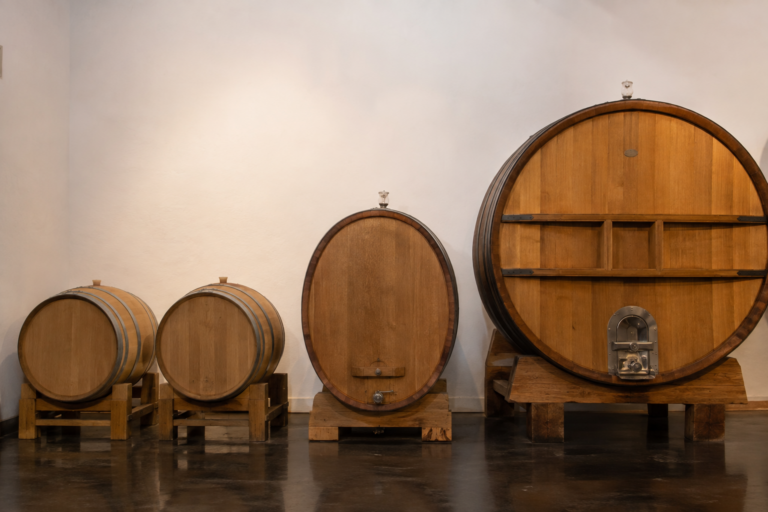
From a 225-litre Bordeaux barrel and a 228-litre Burgundy pièce to a 600-litre demi-muid or a large oak vat holding several thousand litres, the choice of wine barrel size is far from insignificant.
The size of the barrel has a direct impact on wine ageing, its evolution, its aromas… and even the speed at which it develops over time.
So, why are there so many different wine barrel sizes? And how can a simple change in volume transform the style, character and expression of a wine?
The role of the wine barrel: much more than just a container
Unlike a stainless steel tank, an oak wine barrel is not simply used to store wine. During the ageing process, it plays an active role by allowing two essential phenomena to take place:
- Natural micro-oxygenation, thanks to the slight porosity of the wood;
- The release of aromas, coming from the oak itself and the level of toast applied to the barrel.
This combination can bring notes of vanilla, coconut, cedar, clove or black pepper to the wine, while gradually softening its tannins.
However, the intensity of these effects depends greatly on one key factor: the size of the wine barrel.
The different wine barrel sizes used for ageing
The Bordeaux Barrel (225 L)
The Bordeaux barrel, also known as the barrique bordelaise, has a capacity of 225 litres. It is one of the most widely recognised wine barrel sizes and is traditionally used for ageing many Bordeaux wines, particularly red wines.
Its relatively small volume creates a higher wood-to-wine contact ratio, which means the influence of oak can be more pronounced, contributing structure, complexity and aromatic depth.
The Burgundy Pièce (228 L)
Very similar to the Bordeaux barrel, the Burgundy pièce has a slightly larger capacity of 228 litres and is traditionally used in Burgundy, particularly for Chardonnay and Pinot Noir.
The additional three litres may seem insignificant, but this difference is mainly linked to historical traditions and local cooperage practices. Each wine region has developed its own barrel formats over centuries, reflecting its unique winemaking heritage.
The Demi-Muid (500 to 600 L)
Increasingly popular, especially for white wines and certain premium red wines, the demi-muid offers a different approach to oak ageing.
Thanks to its larger volume, it provides a softer oxygen exchange and a more subtle aromatic impact. It allows winemakers to focus more on texture, roundness and complexity rather than strong oak flavours.
The Foudre
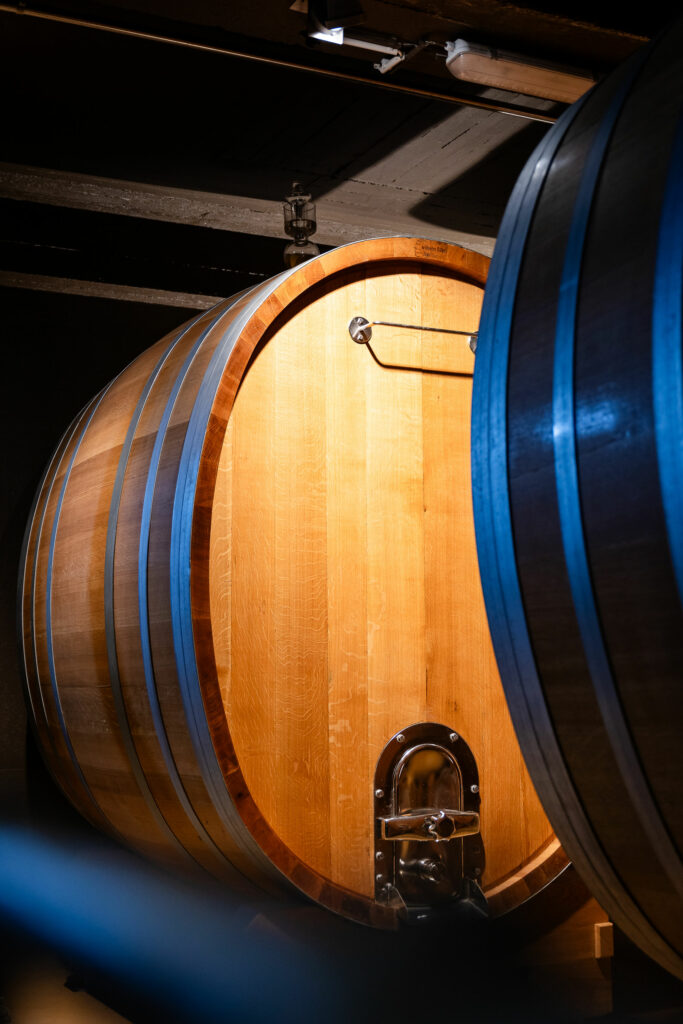
Holding several thousand litres, the foudre is widely used in regions such as Alsace, the Jura and several Central European wine regions.
Its purpose is generally not to impart strong oak aromas to the wine, but rather to encourage a slow and gentle evolution while preserving the wine’s fruit character, freshness and terroir expression.
How does wine barrel size influence the ageing process?
The key lies in a simple principle: the ratio between the wood surface area and the volume of wine.
Imagine two containers made from the same oak:
- A 225-litre wine barrel;
- A 2,500-litre foudre.
The wine ageing in the smaller barrel is in contact with a much greater proportion of wood compared to the wine in the larger vessel.
The result:
- More interaction with oxygen;
- A stronger oak influence and more pronounced aromas;
- A generally faster evolution of the wine.
In other words: the smaller the barrel, the greater its influence on the wine.
Does a larger wine barrel mean lower quality?
Not at all. This is one of the most common misconceptions about wine ageing.
The choice of barrel size depends above all on the style of wine the winemaker wants to create. Some producers aim for rich, structured wines with notes of vanilla, toast or spice. Others prefer to preserve the freshness of the fruit and the mineral character of the terroir.
There is no “better” wine barrel size. Each format has its own purpose and contributes to a specific winemaking approach.
Au-delà de la taille : les paramètres clés de l'élevage en barrique
The origin of the oak
Not all wine barrels are made from the same type of wood.
The most commonly used are French oak and American oak, but some producers also work with Hungarian oak or other oak origins.
Each type of oak has its own characteristics. In general, French oak often brings more subtle aromas of sweet spices, cedar and hazelnut, while American oak is more commonly associated with generous notes of vanilla, coconut and caramel. Hungarian oak often sits somewhere between the two, offering an interesting balance between elegance and intensity.
The toast level
Before the barrel staves are assembled, they are heated over a fire to make them flexible enough to be shaped. This process, known as barrel toast, has a direct influence on the aromatic compounds released by the wood.
A light toast preserves more of the oak’s natural tannins and creates more subtle flavours. A medium toast often enhances aromas of vanilla, spice and toasted bread, while a heavier toast can develop notes of coffee, cocoa, caramel or smoke.
In other words, two barrels made from the same type of oak can produce very different results depending on their level of toast.
The age of the barrel
A new oak barrel naturally releases much more aromatic compounds than a barrel that has already been used several times.
After each ageing process, part of the wood’s aromatic compounds is gradually extracted by the wine. Over time and across multiple vintages, the barrel continues to allow beneficial micro-oxygenation, but its aromatic influence becomes more subtle.
This is why many winemakers combine new oak barrels with barrels that have already held several wines, aiming to achieve the right balance between fruit expression and oak influence.
The length of ageing
Finally, time also plays an essential role in oak ageing.
A few months in a barrel will obviously have a different impact compared to an ageing period of twelve, eighteen or twenty-four months.
The longer the ageing process, the more the wine continues to interact with the wood and oxygen. Over time, it gains complexity, texture and harmony. However, the goal is not to mask the fruit with excessive oak flavours, but rather to create a balance where the oak supports the wine without overpowering its character.
This is why two wines aged in barrels of the same size can develop completely different aromatic profiles.
In summary:
Choosing a wine barrel is not simply about selecting a container. It is a true winemaking decision that can shape the final expression of a wine.
The size of the barrel influences:
- The ratio between wine volume and wood surface contact;
- The intensity of oxygen exchange;
- The extraction of aromatic compounds from the oak;
- The pace at which the wine evolves.
This is why the same grape variety can express itself in very different ways depending on the ageing choices made by the winemaker.
Want to learn more about wine?
Understanding the influence of oak, winemaking techniques and ageing choices is an essential part of wine knowledge developed through WSET courses.
At the Bernard-Massard Wine Academy in Luxembourg, our WSET Level 1 to Level 3 wine courses allow participants to go beyond simple tasting. They provide the knowledge needed to understand how every decision — from the vineyard to the bottle — shapes a wine’s style, quality and character.
Founded in 2023 by Bernard-Massard, a key name in Luxembourg’s wine industry since 1921, our academy supports wine enthusiasts, amateurs and professionals in developing their knowledge through internationally recognised wine education programmes.