WSET Spirits: The Complete Guide
Do you enjoy whisky, rum, gin or Cognac, but find yourself losing track as soon as a conversation starts talking about fermentation, distillation, maturation or raw materials?
“This rum shows notes of vanilla, caramel and ripe fruit…”
Translation: “Okay… but where do all those flavours actually come from?”
That is exactly where a WSET Spirits course can make a difference. It provides a structured way to understand spirits, without needing to be a bartender, distiller or expert in every whisky category in the world before you even start.
But what exactly is WSET Spirits? Who is a spirits course designed for? Is it only for industry professionals? And most importantly… do you already need to know about spirits before getting started?
Spoiler: no.
What is WSET Spirits?
The WSET (Wine & Spirit Education Trust) is an international organisation specialising in education and certification in the drinks industry, particularly wine and spirits.
Today, WSET offers three qualification levels dedicated to spirits: Level 1, Level 2 and Level 3. They allow students to progress from an introduction to spirits to a much deeper understanding of their production, styles and tasting.
Unlike a simple spirits tasting, a WSET Spirits course follows a structured approach. The goal is to understand why a spirit is the way it is.
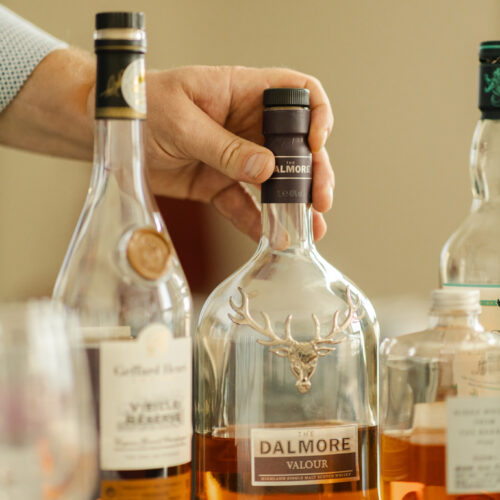
What is a WSET Spirits qualification for?
A WSET Spirits qualification is first and foremost about developing a structured approach and solid knowledge to better understand the main categories of spirits.
It helps you to:
- understand the principles of spirit production;
- identify the main categories and styles;
- understand the influence of raw materials;
- discover the role of fermentation and distillation;
- understand the impact of maturation and post-distillation operations;
- learn how to taste and describe a spirit in a structured way;
- better understand spirit service and how spirits are used in cocktails.
Depending on the level, the course covers categories such as:
- whisky and whiskey;
- rum and other sugar cane spirits;
- Cognac and other fruit spirits;
- tequila and mezcal;
- vodka;
- gin;
- flavoured spirits;
- liqueurs;
- amaro and bitters.
Learning to taste spirits with a professional approach
As with wine, tasting plays an important role in the WSET approach. The Systematic Approach to Tasting Spirits® (SAT) provides a structured way to assess a spirit using sight, smell and taste.
The goal is not to immediately find twenty different aromas in the glass. Instead, it is about learning how to observe and describe what you perceive in a clear and consistent way.
You will look at aspects such as:
- appearance;
- aromas;
- aromatic character and intensity;
- palate structure;
- length;
- the spirit’s overall quality

Is WSET Spirits Difficult?
The short answer: it depends on the level you choose.
WSET does not require you to have an infallible nose capable of identifying a spirit within seconds.
Thankfully.
What it does require is mainly:
- curiosity;
- consistency;
- a willingness to learn;
- and some personal study (from Level 2 onwards).
Level 1 is designed as an introduction to spirits and does not require any previous knowledge or experience. Level 2 also has no specific entry requirements, although having some prior knowledge can obviously be helpful.
Want to take your knowledge further?
The Bernard-Massard Wine Academy offers WSET courses in Luxembourg to help you develop your knowledge of wine and spirits, with courses available in both French and English.
Whether you are a complete beginner, a passionate enthusiast or a drinks professional, there is a WSET level suited to your background and goals.